- The Thread
- Posts
- Can this ad unit boost your LLM citations?
Can this ad unit boost your LLM citations?
Plus: At least you’re not The Trade Desk this week

Gupta Media
March 20, 2026 • Estimated Reading Time: 4 minutes

Today’s Social Media advertising rates are on a tear:
↗️ META: $7.63 | ↘️ TIKTOK: $2.80 | ↘️ SNAPCHAT: $13.31
In this week’s edition:
👽 Why the R is ROAS now stands for Reddit
Can this ad unit boost your LLM citations? 🧠
📌 The four Pinterest trends you need right now
But first…
⚠️ Publicis vs. Trade Desk = the DSPocalypse?
How bad was the news for The Trade Desk this week — and for DSPs in general? Pretty darn bad.
In case you were living under a rock, a leaked Publicis memo revealed that the holding company has advised its clients to stop using The Trade Desk, based on the results of an audit of the platform’s fees. The third-party audit by FirmDecisions allegedly found TTD was auto-opting clients into unapproved, paid tools and applying DSP fees incorrectly. This on the heels of Dentsu and WPP pulling out of The Trade Desk's OpenPath direct-to-publisher buying initiative last month.
That’s set off a wider reckoning about the transparency of DSPs. But for readers of our thought-leadership newsletter The Arbiter, it’s not surprising — we warned our clients about the hidden costs of programmatic platforms two years ago. For more on the fallout from TTD and the DSPocalypse, see this week’s new edition of The Arbiter.
The Inside Scoop🍦: Now trending in performance media
♾️ Meta’s new “Push Delivery” feature is rolling out to advertisers in waves. Push delivery is designed for advertisers who want to help ensure a single new ad gets delivery without setting up a formal test. Creative Testing, on the other hand, allows advertisers to compare up to 5 creative variants and identifies high performers. If you want to compare multiple creatives and get insights on which may perform best, use Creative Testing. If you simply want to help ensure a new ad gets enough spend to generate learnings, use push delivery. Once available, only one push delivery is supported per campaign at a time, for up to seven days.
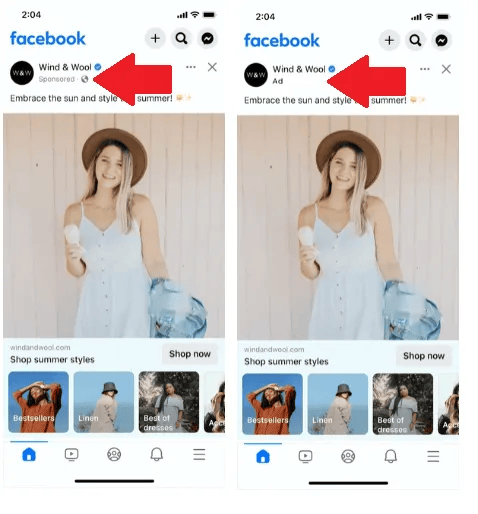
👀 Meta has started updating its ad transparency labels, replacing the “Sponsored” label on in-stream ads with a smaller “Ad” tag on Instagram, with early testing also underway on Facebook. The change is meant to simplify the app’s design, and for marketers, the smaller label may allow ads to blend more naturally into users’ feeds, which could impact ad performance. However, it may also raise transparency concerns from regulators, particularly in the EU:
📺 Google is testing a YouTube sticky banner after ad skips to extend exposure beyond an initial ad view. This enhancement could potentially improve brand recall without a full ad view, and allow metrics such as impressions and engagement to extend beyond an initial ad skip.

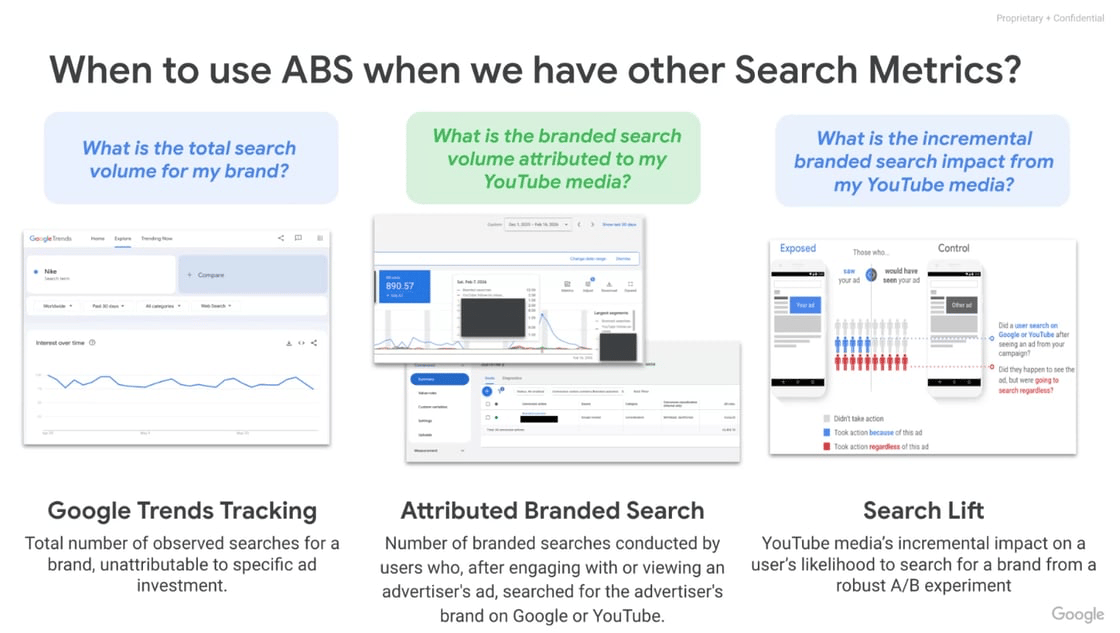
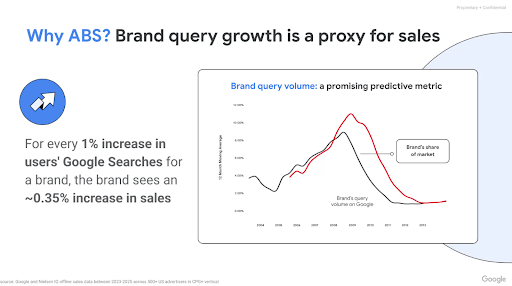
🔎 In January, we reported that Google was rolling out Attributed Branded Searches (also known as Branded Searches), which measure Google and YouTube searches for a brand within seven days of users seeing an ad via PMax, Demand Gen, and Video campaigns on Google-owned inventory. We’re now learning more about this opportunity, including the primary differences between ABS and search lift studies:
ABS looks at all searches for your brand after ad exposure, whereas search lift studies look specifically at incrementality.
Traditional search lift studies are generally only available to very large advertisers. ABS, however, is designed to be more accessible to advertisers of all sizes with minimums rumored to be as low as $5K.
ABS is designed to be "always-on," whereas search lift runs with flighted campaigns.
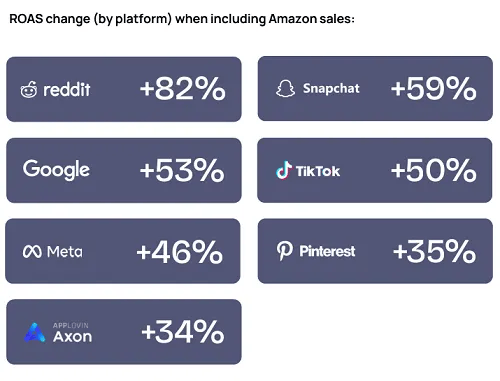
👽 Reddit is playing a larger-than-recognized role in driving purchase behavior, according to a new report from Fospha. The study found that Reddit’s impact on retailers is often undervalued, with ROAS increasing by 82% when Amazon sales are factored in, representing the largest impact among all social platforms. As users increasingly turn to Reddit for product insights, and the prevalence of Reddit results in AI-generated responses continues to increase, the platform is becoming more influential in the customer purchasing process.
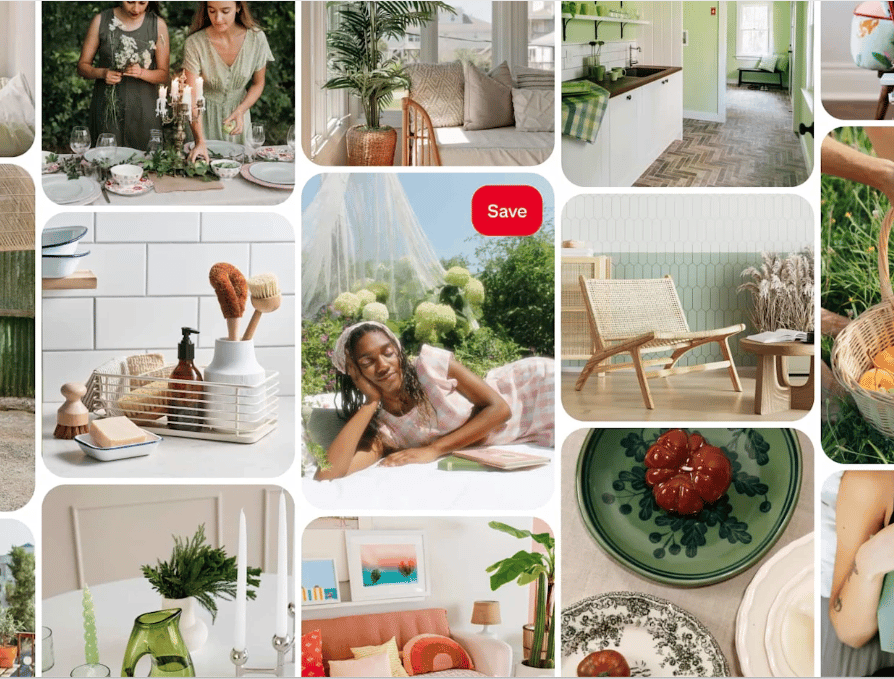
📌 Pinterest has released its spring 2026 trend report, highlighting four key opportunities for advertisers to best align with consumers in the coming months. Moving away from using Pinterest as a unit for total reinvention, this spring pinners are looking for manageable, “low-lift” upgrades they can make to their lives and spaces.
Cosy Micro-Makeover: Users are looking for inspiration to make their rooms feel more “homey” through small aesthetic shifts.
Creative Recipes: Pinners are looking for modern versions of beloved comfort recipes such as soups and other classics.
Micro Escapes: Search volume is surging for tiny indoor and outdoor garden sanctuaries and how users can make these micro-escapes at home.
Cleaning Aesthetic: Wouldn’t be spring without the cleaning. Users are hunting for curated checklists to help them plan resets for their spaces.
🐦 X is developing a new prompt in the post composer that would alert users before they re-share AI-generated content.
Similar initiatives have been successful before. In 2020, Twitter added a similar pop-up that appeared when users tried to retweet an article without actually reading it. This effort reduced the spreading of unread articles, prompting users to open them 40% more often. X’s new prompt could have a similar effect, although they must be able to accurately detect AI-generated posts in order to make an impact.
Following a report from Wired about X being inundated with misinformation since the Iran war began, X’s head of product, Nikita Bier, pledged to further curb its spread, posting: “Starting now, users who post AI-generated videos of an armed conflict—without adding a disclosure that it was made with AI—will be suspended from Creator Revenue Sharing for 90 days. Subsequent violations will result in a permanent suspension from the program.”
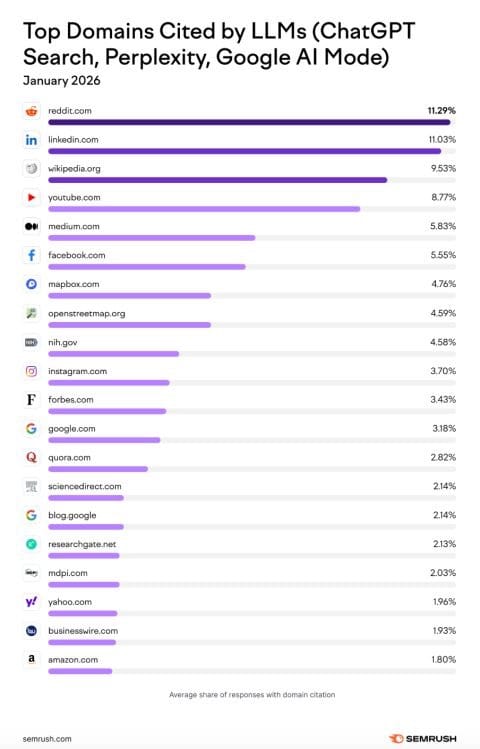
❓Quora is offering a beta that boosts Promoted Answers content — which, Quora claims, gives that content a better chance at surfacing within AI overviews. An important source of information for AI-powered search experiences, Quora continues to rank among the top cited domains in LLMs including ChatGPT, Perplexity, and Google AI search:
Thanks for reading! We’ll be back next week to fill your inbox with more tips, tricks, and treats from the addressable universe.
In the meantime, stay up to date with the latest performance marketing intelligence by following us on Linkedin, Instagram, and X.
This week’s edition of the Thread was created by Jess Dashner, Caitlin LaValle, Anoushka Madan, Sabina Saktaganova, Mariya Samardzhieva, Kiara Quigley, Lara Spijkerman, and Carly Carioli.