- The Thread
- Posts
- Is your marketing ready for GenAlpha?
Is your marketing ready for GenAlpha?
Plus: 3 tips on Insta’s new algo

Gupta Media
April 10, 2026 • Estimated Reading Time: 5 minutes

Today’s Social Media advertising rates are breaking bad:
↗️ META: $8.39 | ↘️ TIKTOK: $3.09 | ↗️ SNAPCHAT: $11.21
In this week’s edition:
💼 This one format still wins LinkedIn
Here’s what changed in Instagram’s new ranking algo 🧠
📺 Why Coachella TV is a turning point for YouTube
But first…
🔮 Is your marketing ready for Gen Alpha?
As we look ahead to the next generation of consumers, a recent eMarketer report highlights how Gen Alpha—for you Boomers, that’s folks born between 2013 and 2024—is emerging as the first truly mobile-first, multiscreen-native audience. Here’s the highlights:
An estimated half of Gen Alphas will be active gamers in 2026, more than twice as many who use social media. EMarketer recommends using platforms like Roblox to collaborate with trusted creators and focus on community-first integrations such as branded quests, creator-hosted events and in-world rewards that feel native.
Two-thirds of Gen Alpha will watch YouTube in 2026, making the platform foundational to youth strategy. Three in four Gen Alphas will be co-viewing with their parents, requiring brands to engage both audiences simultaneously.
Nearly half of Gen Alphas juggle multiple screens at once. Advertisers cannot rely on sustained attention, and rather should focus on ultra-short, impactful creative that works parallel to gaming or scrolling.
The Inside Scoop🍦: Now trending in performance media
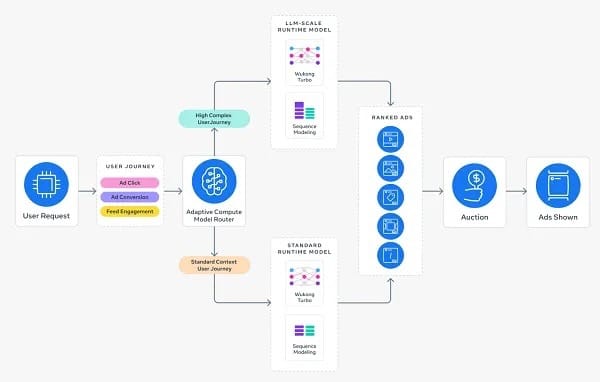
♾️ Meta announced a new Adaptive Ranking Model to improve their ad serving process on Instagram—and it’s a must-read for those of you who keep tabs on “The Algo.” According to Meta, the goal, as always, is to serve more relevant ads to users. And the question for marketers, of course, is: “Sure, but how?” A few key principles below, but the system’s LLM-scale intelligence is said to improve targeting, and Meta claims ad performance is up 3% in ad conversions and 5% in CTR. So what’s going on under the hood?
The creative gap is widening: Better AI models means there’s a faster separation of good vs. bad ads
Signal quality matters more: Pixel/CAPI/data hygiene will provide a real advantage
Broad targeting keeps winning: AI is doing more of the audience work
💬 WhatsApp is expanding its ad functionality: advertisers can now drive users to a website directly from Status ads, not just into a chat. (For context, Status is WhatsApp’s Stories-like feed: full-screen, ephemeral content. Until now, ads here could only open a conversation.) Here’s what to know:
Ads will appear in the Status, not in people’s personal chats and calls.
The WhatsApp Status placement will be automatically included in newly created campaigns or those using Advantage+ Placements for the following objectives: Awareness, Traffic, Engagement, Leads, Sales
The WhatsApp Status placement is only available when the Instagram Stories placement is also selected; it cannot be selected as a standalone placement.
WhatsApp Status ads automatically includes users of unknown age. If you need strict age targeting, you must manually uncheck this option in the Audience Controls section of your ad setup.
Meta is gradually rolling out these new features and expanding availability. You may initially see lower delivery on the WhatsApp Status placement.
🎯 Also new on WhatsApp: Ads that click to WhatsApp ads can now optimize specifically for Leads rather than just "Conversations," which Meta claims lowers Cost Per Lead (CPL) by an average of 24%.
To unlock this, you must share at least 10 lead or purchase signals in a 30-day window via the WhatsApp Business app or Conversions API (CAPI).
Once eligible, select the "Leads" objective and set your performance goal to "Maximize number of leads" in Ads Manager.
⚠️ Meta is now trying to auto-build more of your ads, pulling from your site and app store listings to create new formats by default. With a March 24 update, the below updates have been rolled out. According to Meta, they will apply “sticky opt out” so that if a user opts out, Meta will remember and honor that opt-out in future ads. Previews will be available for all formats.
Meta will now automatically create carousels, slideshows, and collection ads by combining your uploaded creative with images pulled directly from your website. This feature will be on by default, but you can opt out of this “website highlights” automation in the "format display" settings to keep your creative limited to what you manually uploaded.
Previously, Meta could automatically turn carousels into video slideshows. Now, there’s a manual setting to enable or disable the video slideshow feature for carousel ads.
App Advertisers: Meta will now automatically use your assets from your app store to build carousel and video slideshow versions of your single image or single video ads. This feature defaults to on if “app store details” is enabled in creative setup. You can opt out in format display options.
📞 Meta has introduced Call Insights: a new reporting feature in Meta Business Suite that shows which ads are driving calls, including duration, cost per quality call, and timing, with the ability to define what qualifies as a quality call.
💸 Meta’s “Limited Spend to Excluded Placements” feature has expanded from Sales and Leads to now include Traffic, Engagement, and App Install objectives. This setting allows Meta to spend up to 5% of your budget on each placement that you have explicitly opted out of.
Advertisers will be defaulted into this feature when they opt out of placements or platforms. You can turn off the checkbox to continue with manual placements. Supposedly, this setting is “sticky.”
💡 TikTok may drive music discovery, but Instagram is emerging as the superfan platform—according to data commissioned by Meta.
The new study, conducted by Luminate, reveals that Superfans engage with music artists in at least 5 of 13 unique ways. These behaviors include attending live performances, purchasing physical merchandise and serving as a primary word-of-mouth ambassador.
The study finds that the highest concentration of these superfans can be found on Instagram. 32% of Instagram daily music engagers are Superfans, with figures rising to 38% among Gen Z.
💅 Pro Tip: There's now an official Meta Pixel template inside Google Tag Manager (GTM). This lets you reuse your existing GA4 dataLayer. Enhanced Ecommerce events will map automatically. And this means no more duplicate tagging for Purchase, AddToCart, ViewContent, InitiateCheckout.
🔎 Google’s is testing TV-style channels on YouTube for CTV viewing. First up, later this month: Coachella TV.
These topic-based channels will stream 24/7 and provide a mix of live and on-demand content, offering another alternative to traditional television. (In the case of Coachella, that means live coverage while the concerts are happening, augmented with round-the-clock festival highlights.) It’s another way YouTube is attempting to position itself as a destination for passive viewing—and for advertisers to reach users who are consuming content more like traditional TV.
⏰ TikTok has integrated Cameo directly into the app, allowing users to request and purchase personalized creator videos via new in-app buttons. This partnership streamlines creator monetization by keeping the entire transaction within TikTok, which could help both TikTok creators and Cameo make more money. It might also help TikTok keep its top creators posting by providing them with another monetization pathway.
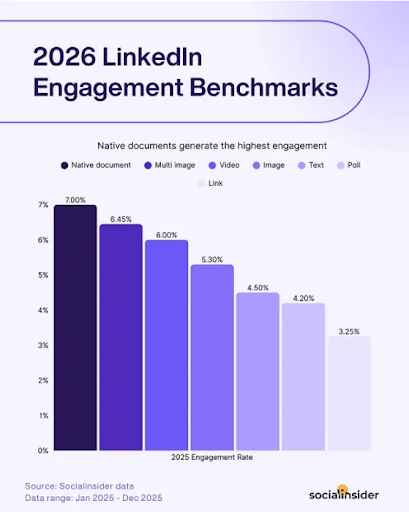
💼 LinkedIn has been pushing video posts lately, but a recent report from Socialinsider found that the most productive format is a little more traditional. According to the new data, “native document” format—including PDFs in a carousel format—drives the most engagement out of all LinkedIn content. And yes, that varies significantly from other social media platforms, where video posts have become the primary engagement drivers.
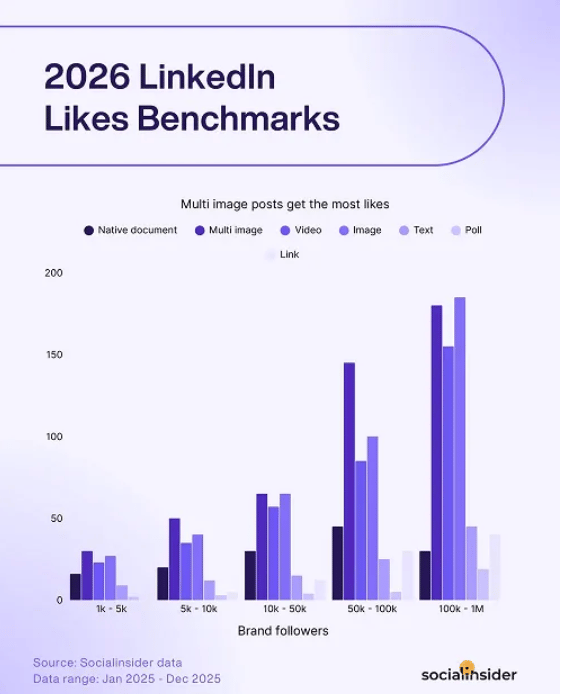
The report also revealed that multi-image posts generate the most likes among app users.
We’ve seen this hold true in recent campaigns, with Document ads outperforming single image, carousel, and video ads in terms of cost per lead and form completion rate.
📌 Pinterest just launched “Promote a Pin,” a new unit to help individual creators and small businesses easily boost content with minimal setup, making it a low-barrier entry point into paid media.

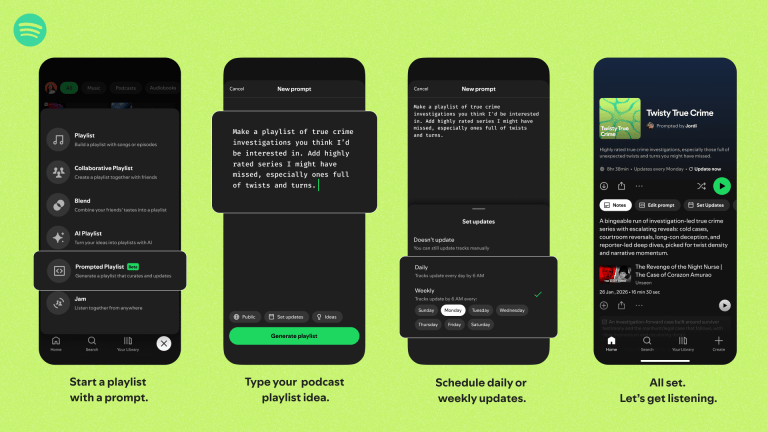
🔊 Spotify is expanding its Prompted Playlist feature to include podcasts, allowing users to create playlists using prompts based on their listening history and real-time signals like trends and charts.
The feature includes contextual notes explaining why episodes are recommended.
The update is rolling out in English to Premium users across select markets (U.S., Canada, U.K., Ireland, Australia, New Zealand, and Sweden) and aims to help listeners discover new shows and curate content more easily.
🖥️ Yahoo is rolling out AI-powered tools within its DSP to simplify campaign activation and management—a move that could begin to shift its customer base from enterprise advertisers to mid-market, performance-driven brands. The move prioritizes automation, cost efficiency, and ease of use, making the platform more accessible. Or, to put it in AdWeek speak: “Yahoo Moves Downmarket,” by which they mean a way-lower-cost, more user-friendly alternative to complex DSPs like The Trade Desk.
Thanks for reading! We’ll be back next week to fill your inbox with more tips, tricks, and treats from the addressable universe.
In the meantime, stay up to date with the latest performance marketing intelligence by following us on Linkedin, Instagram, and X.
This week’s edition of the Thread was created by Jess Dashner, Anoushka Madan, Sabina Saktaganova, Mariya Samardzhieva, Kiara Quigley, Lara Spijkerman, Kayleigh McDonald, and Carly Carioli.