- The Thread
- Posts
- How to ChatGPT your Meta campaigns
How to ChatGPT your Meta campaigns
Plus: Snapchat’s AI-powered ads talk back

Gupta Media
May 01, 2026 • Estimated Reading Time: 5 minutes

Today’s Social Media advertising rates are pounding juleps with Renegade and the Puma:
↗️ META: $8.66 | ↘️ TIKTOK: $3.84 | ↘️ SNAPCHAT: $8.50
In this week’s edition:
📌 Pinterest is a CTV platform now
Snapchat’s new AI-powered ads talk back 👻
☠️ Meta’s Snapchat killer is here
But first…
🧠 How to ChatGPT your Meta campaigns
This changes everything.
Meta announced this week it will allow advertisers to use third-party AI tools—including ChatGPT and Claude—to create and manage Meta advertising campaigns, marking a dramatic shift in its approach to the LLM era.
Previously, Meta had focused on developing its own AI-powered solutions. But with the AI wars raging, this move is seen as a way of locking in advertisers by making Meta’s ad-platform agnostic when it comes to the tools advertisers will use to manage the increasingly complex process of creating and managing Meta campaigns.
So what’s actually happening? Meta is introducing AI connectors to enable “secure, direct connection between Meta ad accounts and supported AI tools” using Model Context Protocol, the default API-like connector for LLMs. According to Digiday, at launch Meta will allow AI tools that support “cross channel insights and campaign management” among other tasks.
⚡Translation: this opens the door to AI agents taking over campaign gruntwork—and maybe more.
The Inside Scoop🍦: Now trending in performance media
♾️ Meta — for those of us still managing campaigns the old fashioned way — is adding machine-learning to its troubleshooting stack. The platform announced this week that it is expanding its AI business assistant to advertisers and agencies across major global markets.
Meta tells us that troubleshooting will first route users to the AI assistant to resolve issues. If the AI cannot find a solution after some back-and-forth, users will then be routed to a real human for support.
Since there is no guarantee the human will see the previous AI conversation, users should make sure to save it before getting routed.

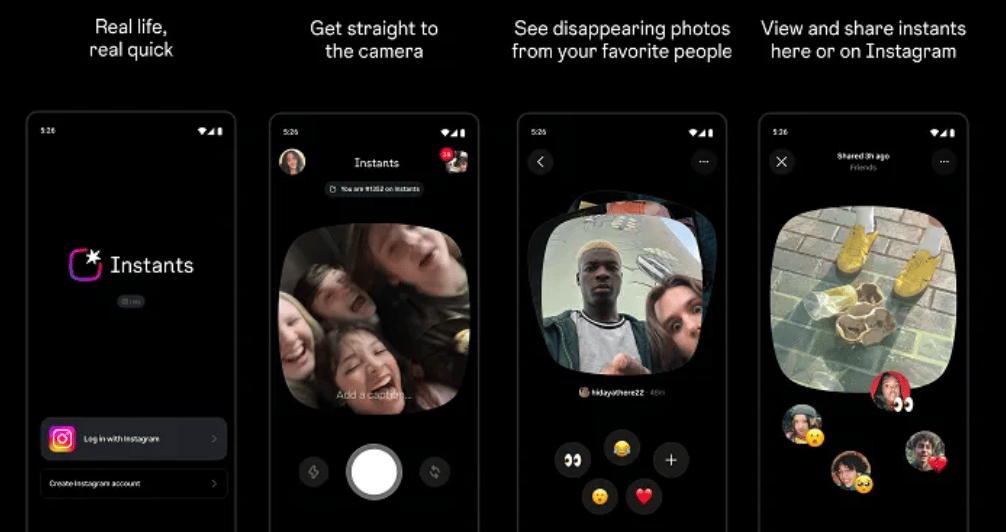
📷 Back in February, we reported that Meta was experimenting with a new image sharing app called Instants—essentially a stand-alone reboot of an Instagram feature called Shots. Meta has now officially launched an Instants app, seemingly in an attempt to shrink Snapchat’s market share.
Like Snapchat, Instants opens to the camera and lets users share disappearing images with friends.
According to SocialMediaToday, the launch is proof of a “vendetta” by Meta against Snapchat, stemming from Mark Zuckerberg’s failed attempt to acquire Snap for $3 billion back in 2013. “Since then, Meta has launched several Snapchat replicant features, each designed to dilute Snapchat’s presence,” SMT notes, “including Instagram Stories, which has gone on to become a major element of Instagram, and which has impacted Snapchat’s growth trajectory.
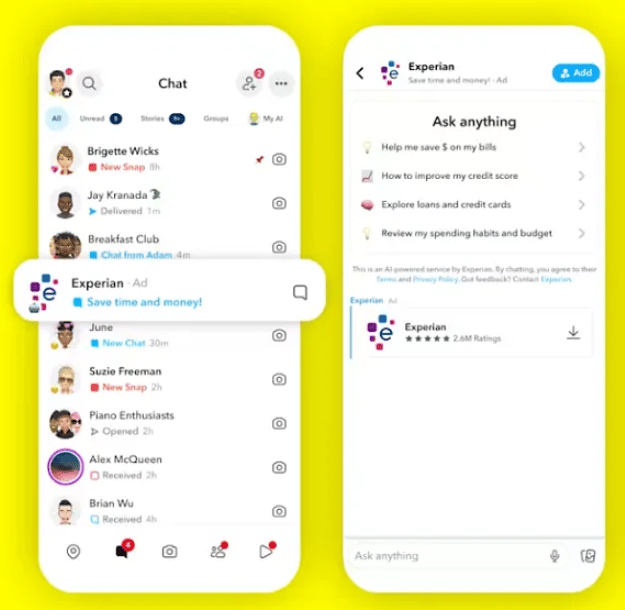
👻 Snapchat, meanwhile, is introducing AI-powered Sponsored Snaps, which let users interact with branded chatbots directly in their inbox. The new option is an extension of Sponsored Snaps.
According to Snapchat, Sponsored Snaps have been driving 22% more conversions than “other ad options.”
Users can engage via suggested prompts and ask follow-up questions to learn more about a brand or product, creating a more conversational ad experience.
While Snap positions this as a way to make interactions feel more “immediate, personal, and useful,” it also pushes automated ads into a highly personal space. We’ll be watching to see how users react.
🔎 Google is offering a shopper data integration with Albertsons Media Collective, bringing first-party data into YouTube and third-party inventory in Display & Video 360 campaigns. With insights from over 36 million weekly shoppers across a variety of retail outlets, advertisers can more precisely target high-intent audiences while measuring impact through SKU-level sales reporting.
📺 YouTube is rolling out its own AI search experience, called “Ask YouTube.”
How it works, according to YT: “Try it out by selecting ‘Ask YouTube’ in the search bar. For example, you can ask for help planning a 3-day road trip from San Francisco to Santa Barbara, and you’ll get a structured, step-by-step itinerary instead of a list of videos. The response will bring together a new mix of long-form videos, Shorts, and informative text featuring local tips and must-see stops. You can ask follow-up questions like, “where can I find good coffee?” to explore local spots along your route. We’ll surface videos and relevant video segments, accompanied by their titles and channel details, to make it easy to discover new creators and jump into the most helpful content from your search.”
If you want to try it out, you can go to youtube.com/new, although it’s currently available for YouTube Premium members 18+ in the US who opt-in.
⏰ TikTok introduced Creator Self-Deletion for LIVE Highlight Videos. With this feature, creators may delete LIVE highlight videos directly from their TikTok account. Once the video is deleted, the creative is “Unavailable” in GMX Max video reporting and removed from delivery.

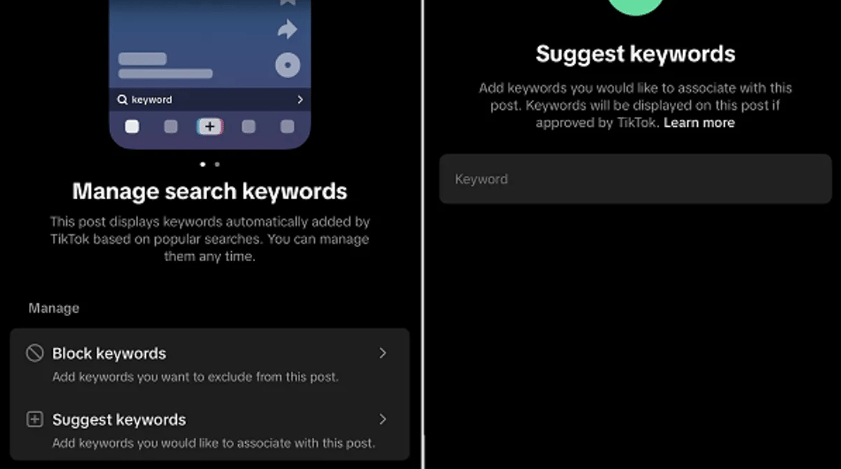
💅 Pro Tip: TikTok now allows creators to manage keywords used for content discovery. While keywords are still auto-generated based on popular searches, creators can add, remove, or block them to better match their content and target the right audience.
This update gives creators more control over how their videos are surfaced—potentially improving reach, relevance, and reducing mismatches from automated tagging—though TikTok maintains oversight to prevent misuse.
🎧 TikTok announced that its "Add to Music App" feature has been used to save more than 6 billion tracks in the past year.
This easy-to-use feature lets users save songs discovered on the platform, reinforcing TikTok's position as a critical driver of music consumption and generating billions more streams in repeat listening across premium music streaming services (DSPs), such as Spotify, Apple Music and Amazon Music.
🔊 Spotify is partnering with Peloton to launch a global fitness content hub, giving Premium users access to 1,400+ workout classes across categories like yoga, strength training, and meditation.
For Spotify, the move is an expansion into wellness and it creates new revenue streams beyond music and podcasts.
For Peloton, the partnership leverages Spotify’s massive audience to scale its content and allows it to grow internationally without relying on hardware.
📊 Spotify is also rolling out new measurement & reporting updates to Ads Manager for podcast campaigns:
You can now use the Spotify Pixel or Conversions API (CAPI) to measure performance for Reserved podcast buys directly in Ads Manager.
New de-duplicated total reach and frequency reporting is available across campaign, ad set, and ad levels for podcast campaigns.
You can now view delivery insights by Podcast Episode Topics.
💼 LinkedIn is rolling out Off-Platform Event Ads, giving marketers a new way to promote events without needing a native LinkedIn Event Page.
By May 6, advertisers can promote external events in-feed and drive registration to their own sites, such as webinar platforms, landing pages or livestream sites.
📌 Pinterest just announced the first step in its expanded connected TV push, building on its acquisition of tvScientific last December. As explained by Pinterest: “tvScientific by Pinterest is the first ad platform to offer direct access to Pinterest’s high-intent audiences for CTV campaigns.” It will also leverage tvScientific’s AI-powered optimization technology.
According to Pinterest, “on average, when tvScientific AI is enriched with Pinterest’s high-intent signals, it leads to a +27% increase in outcomes driven per $100 in spend, with purchases up +65%.”
They further cited consumer electronics company LG, which drove a 73% increase in unique households reached because of its access to Pinterest audiences and its expanded reach via CTV. This additional reach drove a 24% lift in net new customers.
🛍️ Walmart is launching Connect Select, a new marketplace within its own Walmart DSP that lets advertisers buy streaming TV ads.
The platform provides access to inventory from Vizio and publishers like Warner Bros. Discovery, and integrates with major supply-side platforms such as FreeWheel, Index Exchange, Magnite, and PubMatic.
Their goal is to simplify CTV ad buying and expand access to TV advertising for brands on Walmart’s marketplace, particularly for small and medium-sized businesses.
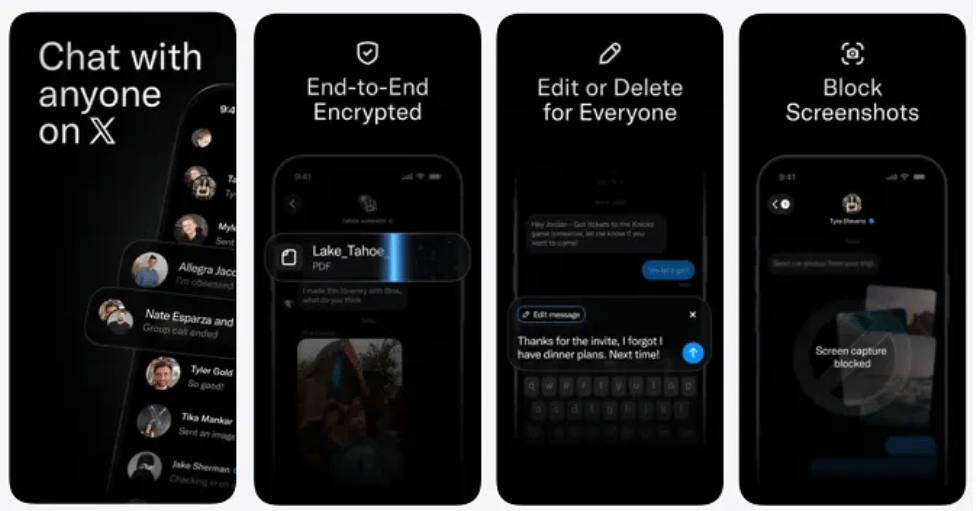
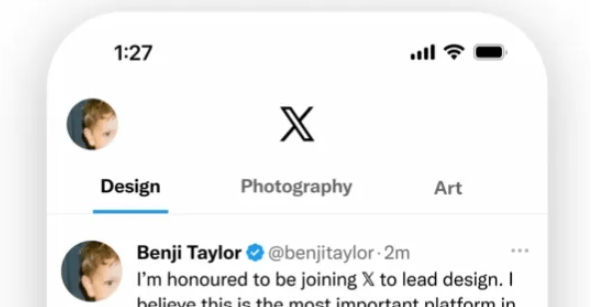
🐦 X has launched a separate X Chat app, providing a dedicated home for X DMs, as well as a new way for users to engage outside of the main app. The X Chat app is now available for iOS, which X is promoting as being ad-free, with no tracking.
Meanwhile, back on the main platform, X has launched topic-based Custom Timelines, allowing users to swipe between and pin interest-based feeds to their home tab.
Powered by Grok AI, posts are filtered into 75 key discussion topics ranging from sports to art.
With X ending support for the communities feature, the custom timelines serve as a replacement, similar to the swipeable topic feeds Twitter introduced in 2019.
Currently limited to premium iOS subscribers and through organic use, the feature signals a shift toward more interest-driven content consumption, potentially opening the door to custom timeline level targeting and contextual ad environments.
Thanks for reading! We’ll be back next week to fill your inbox with more tips, tricks, and treats from the addressable universe.
In the meantime, stay up to date with the latest performance marketing intelligence by following us on Linkedin, Instagram, and X.
This week’s edition of the Thread was created by Jess Dashner, Anoushka Madan, Mariya Samardzhieva, Sabina Saktaganova, Sims Wilson, Kiara Quigley, Lara Spijkerman, Kayleigh McDonald, Caitlin LaValle, and Carly Carioli.