- The Thread
- Posts
- The 7 rules for great ChatGPT ads
The 7 rules for great ChatGPT ads
(Now that you can buy ‘em self-serve)

Gupta Media
May 08, 2026 • Estimated Reading Time: 4 minutes

Today’s Social Media advertising rates are getting fitted for their cap and gown:
↗️ META: $9.11 | ↘️ TIKTOK: $3.76 | ↗️ SNAPCHAT: $10.81
In this week’s edition:
🧠 OpenAI’s self-serve ad platform is open for biz
TikTok expands “out of phone” ads ⏰
♾️ Meta: now with even more AI
But first…
🧠 The 7 rules for ChatGpt Ads
Start your engines: OpenAI’s self-serve platform has just opened (see below) — so now it’s time figure out what you should do with it.
AI search platform Adthena tracked 50,000+ ChatGPT ads across 600+ advertisers. The ads typically consist of just a headline (30-36 characters on average), short body copy (around 19 words), and a destination. Here’s what they found to be the characteristics of the top performers:
The top ads follow a “Brand:Benefit” format with a name, colon, and value claim.
Lead with a brand name, to drive awareness for users engaged in a conversation.
Feature context mirroring, echoing the user’s query.
Use concrete claims and numbers like specific dollar figures and precise rates, which consistently outperforms vague promises.
Utilize the term “free” to remove frictions for users close to a decision.
Use action-specific CTAs such as “Open Account” and “Claim Credits.”
Mirror ChatGPT’s confident and measured tone.
The Inside Scoop🍦: Now trending in performance media
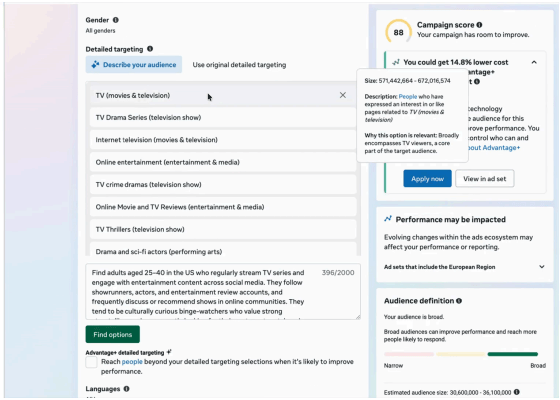
♾️ Meta is rolling out a new AI-Powered discovery tool for Detailed Targeting that allows brands to describe their target audience in plain language, as opposed to scrolling through an interest list. Meta’s AI will interpret the description and recommend the most relevant interests and behaviors from its existing detailed targeting options. (To be clear: no new targeting options are being released as part of this update.) Rollout will be finished by the end of May. Here’s how it works:
You have 2,000 characters to describe your target consumer.
You can review every recommendation and remove any that don’t fit.
To best prompt the AI follow this template: “Find [WHO]: [demographics / life stage / location] who are interested in [interests / topics / creators] and who regularly [behaviors / actions / engagement signals]. They tend to be [lifestyle / values / mindset] and are currently [need state /situation / motivation]. (Optional: Exclude people who [key exclusions].)”

📍 Meta has been shifting local-market geography from Nielsen DMA regions to Comscore Markets, which are ZIP-code-based local market definitions used across linear TV and digital media. Comscore says the system covers 210 U.S. local markets and is designed to create more consistent local definitions across linear, digital, and cross-platform media.
Here’s the wrinkle: in Meta Ads Reporting, DMA Region and Comscore Markets breakdowns may now appear grayed out unless advertisers manually enable them. Once enabled, the reporting is forward-looking only; data generally starts from that point forward and is not available retroactively.
🤖 Last month, we reported that Meta is opening up its ad ecosystem to third-party AI tools like Claude and ChatGPT. Now, that support is expanding. Along with the Model Context Protocol (MCP) server, Meta now supports a second AI connector through Ads Command Line Interface (CLI). Meta has further expanded upon the capabilities of these AI connectors, including:
Comprehensive Reporting: Surface insights and pull detailed reports to understand campaign performance.
Campaign Management: Create and edit ads, ad sets, and campaigns using natural language.
Catalog Management: Create a product catalog, add product data, and troubleshoot data feed issues.
Signal Diagnostics: Access signal health and quality information to prioritize your signals setup.
🚨 Buyer Beware: Instagram will now open the link in Reels and In-Feed placements if a user taps into the caption to read more or clicks on comments (see below). We suspect that this could be inflating LCTRs on the platform.


🧠 OpenAI has launched a beta version of their own self-serve Ads Manager. The Ads Manager Beta is currently only available for US advertisers, and ads are rolling out in the US, Australia, New Zealand and Canada.
Along with Ads Manager, OpenAI has announced the rollout of a conversion API (CAPI), a cost-per-click bidding product and new measurement tools. Stay tuned.
🔎 Google Ads is testing a way for advertisers to preview the impact of adding negative keywords to your campaign. Advertisers can now enter up to 10 negative keywords and view impact estimates by clicking the “Preview impact” button accessible through the negative keyword management interface.

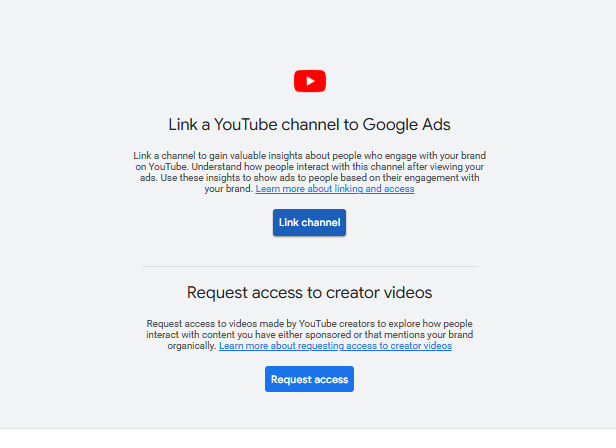
🤝 YouTube creator partnerships (in Beta) are now available in Ads Manager, similar to Meta’s Creator Marketplace. You can also request access to creator videos that you can use to add into your campaigns:

⏰ TikTok announced an expanded partnership with Vistar Media that will allow advertisers to extend TikTok campaigns across more than 1.1 million digital out-of-home placements (DOOH) beyond the app, including high-profile inventory like Times Square.
The expansion builds on TikTok’s “Out of Phone” offering, giving brands more opportunities to adapt TikTok-first creative for billboards, malls, cinemas, airlines, restaurants, and other real-world environments.
Keep an eye out for how brands are tailoring their TikTok-native creative for these larger-scale placements.
⏪ Need a quick refresher on all things new-to-TikTok in Q2? Check out their 8-minute “Product Preview” video here.
💅 Pro Tip: The “Three Layered Bid Recommendation” is now in GA for TikTok Smart+ Lead Generation campaigns.
The Target CPA field now shows Low / Medium / High bid recommendations in a dropdown menu.
Medium is pre-filled by default.
Each tier displays a competitive index, indicating the percentage of competitors outbid by that specific value.

👻 Snapchat’s Store Visit Metric will no longer be supported starting May 27, 2026.
📌 Pinterest showed strong Q1 2026 results, adding 12 million new users and reaching 631 million monthly active users globally, with most new user growth coming from markets outside the U.S. and EU.
The platform also reported 18% year-over-year revenue growth and maintained quarterly revenue above $1 billion, though revenue and revenue per user declined quarter-over-quarter across all regions following Q4 seasonality trends.
For advertisers, Pinterest highlighted continued momentum in its AI-powered discovery and ad products.
Pinterest also reiterated that advertisers using Performance+ campaigns are seeing improved ROAS and more efficient CPA/CPC performance.

🦚 NBCU released their latest product update: Mindful moments. This is a 10-second pause break built into programming to give viewers a moment of calm. (Think of it as their answer to YouTubeTV’s “Moment of Zen.”) Brands can add their logo and an optional product image to any of 10 pre-defined zen-moment video templates.
🌎 Universal Ads has updated its campaign-building flow. You can now pair audience and contextual targeting together. Previously you’d choose either audience targeting (Performance+) or contextual (content select) for the campaign.
Thanks for reading! We’ll be back next week to fill your inbox with more tips, tricks, and treats from the addressable universe.
In the meantime, stay up to date with the latest performance marketing intelligence by following us on Linkedin, Instagram, and X.
This week’s edition of the Thread was created by Jess Dashner, Anoushka Madan, Mariya Samardzhieva, Sabina Saktaganova, Sims Wilson, Kiara Quigley, Lara Spijkerman, Kayleigh McDonald, Caitlin LaValle, and Carly Carioli.